

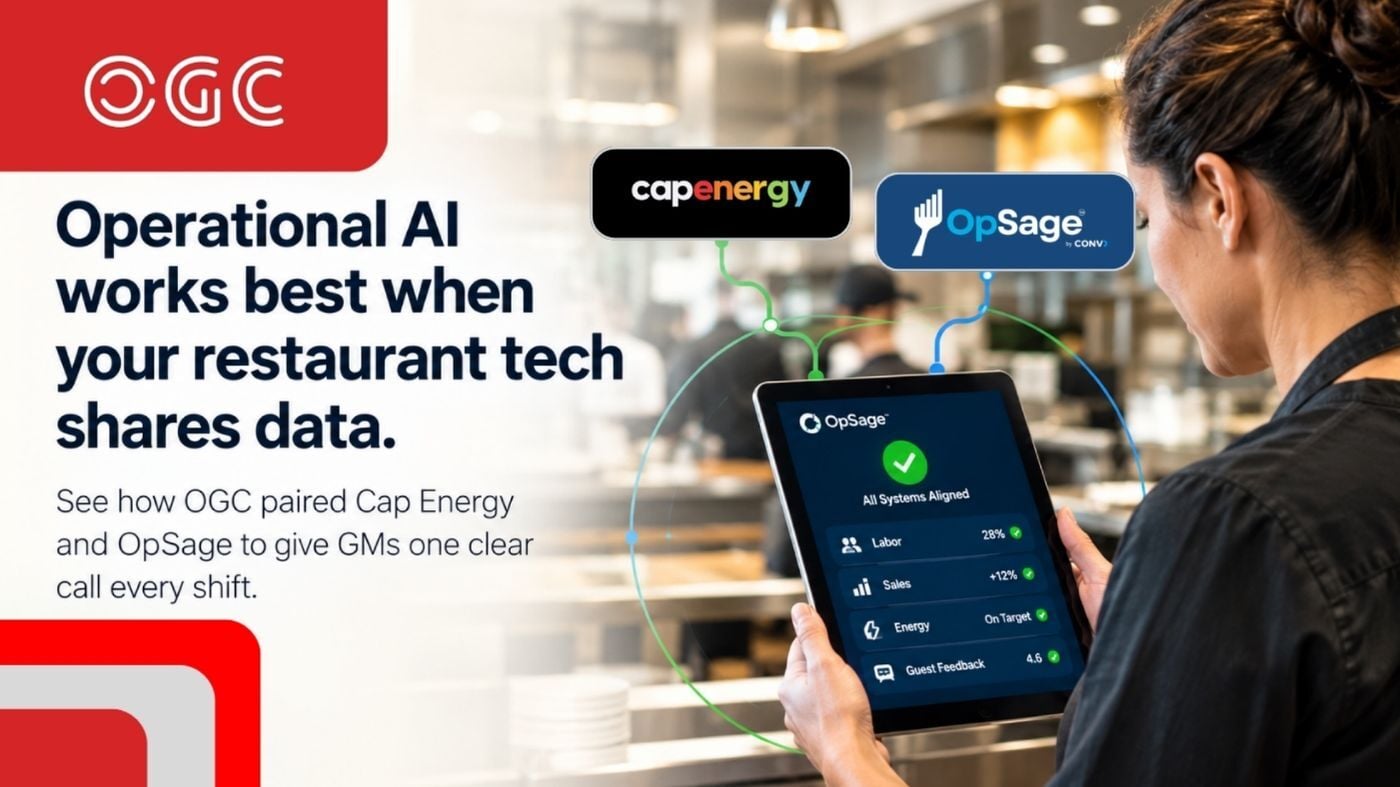
Most enterprise restaurant brands already pay for good technology. The money leaks out in the gaps between those tools, where one system spots a problem and the person who can fix it never hears about it.
Cap Energy and OpSage show what happens when two proven platforms stop working in separate lanes. OGC put them in the same room. The result is a GM dashboard that catches a failing kitchen hood hours before the lunch rush.
Good data in the wrong place
Cap Energy connects to kitchen equipment like broilers, fryers, and blast chillers and tracks how much power each one draws. That data is how operators cut energy costs by up to 20%. It also tells you the moment a piece of equipment stops behaving the way it should.
The problem is who sees it. Energy data usually sits in a facilities portal that a GM opens once a quarter, if ever. Meanwhile the GM starts every shift in an operations view built around sales, labor, and prep. A hood that quits pulling air shows up clearly in one system and not at all in the other.
When two tools keep what they know to themselves, the operator pays twice: once for the subscriptions and again for the problem nobody caught.
How OGC made the match
OGC was working with an enterprise restaurant brand on operational AI and GM dashboards. The brief was clear: give store leaders what they need to run tighter shifts, cut waste, and stop paying for costs nobody saw coming.
OpSage covered the dashboard side. Its OpSage Daily view gives each GM one morning read on forecasted orders, prep, alerts, and week-to-date sales. Cap Energy already had the equipment-level data a view like that was missing.
So OGC introduced the two teams. I've spent 27 years in restaurant tech, and this is the pattern we look for: two vendors who each do one job well and become far more valuable once their data flows together. Neither company had to change what it does. They had to connect.
What the GM sees before the rush
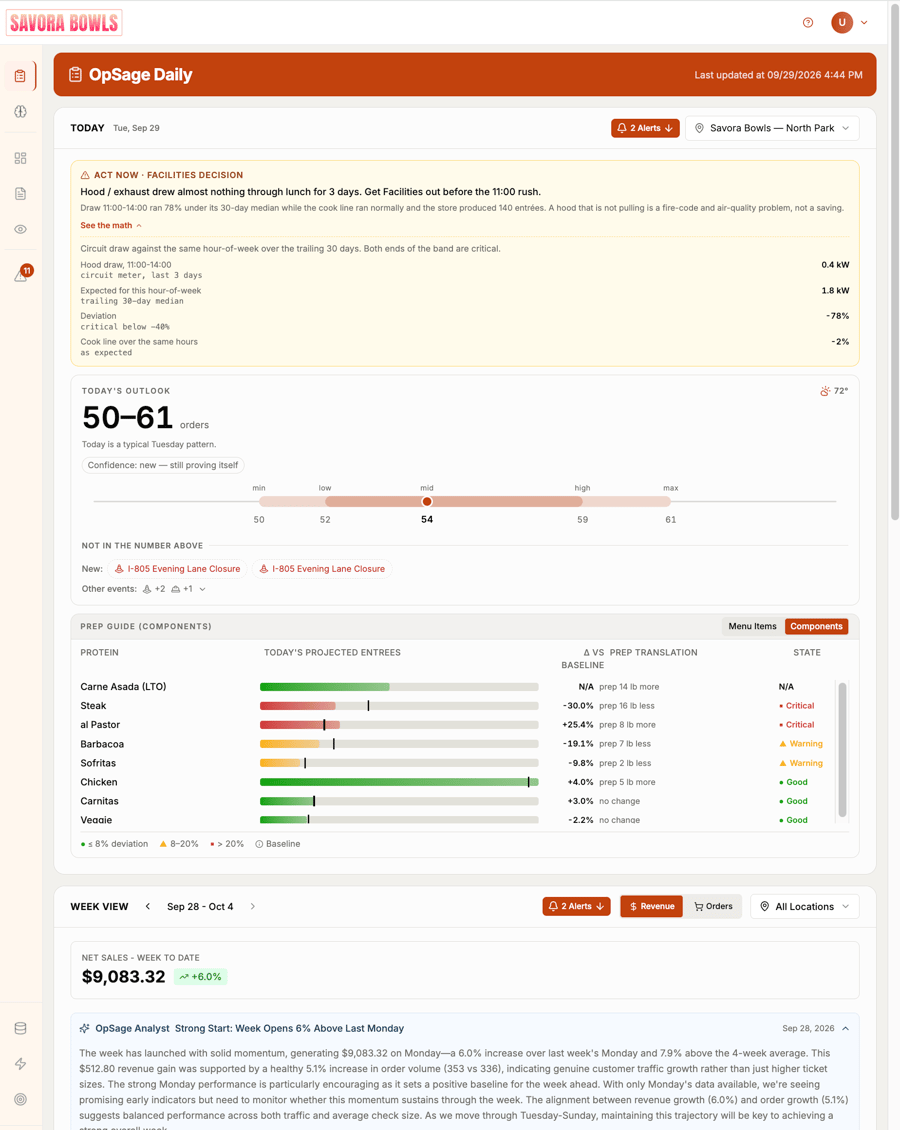
At the top of the GM's Today card, above the order forecast and the prep guide, is an Act Now alert marked as a facilities decision. The kitchen hood and exhaust drew almost nothing through lunch for three straight days. Between 11 a.m. and 2 p.m. the hood circuit ran at 0.4 kW against an expected 1.8 kW for that hour of the week, 78% below its trailing 30-day median.
Read in isolation, that could pass for a nice dip on the energy bill. OpSage reads it against the rest of the store. The cook line ran within 2% of normal over the same hours, and the store produced 140 entrées. A full line with a hood that barely moves air means the equipment has failed.
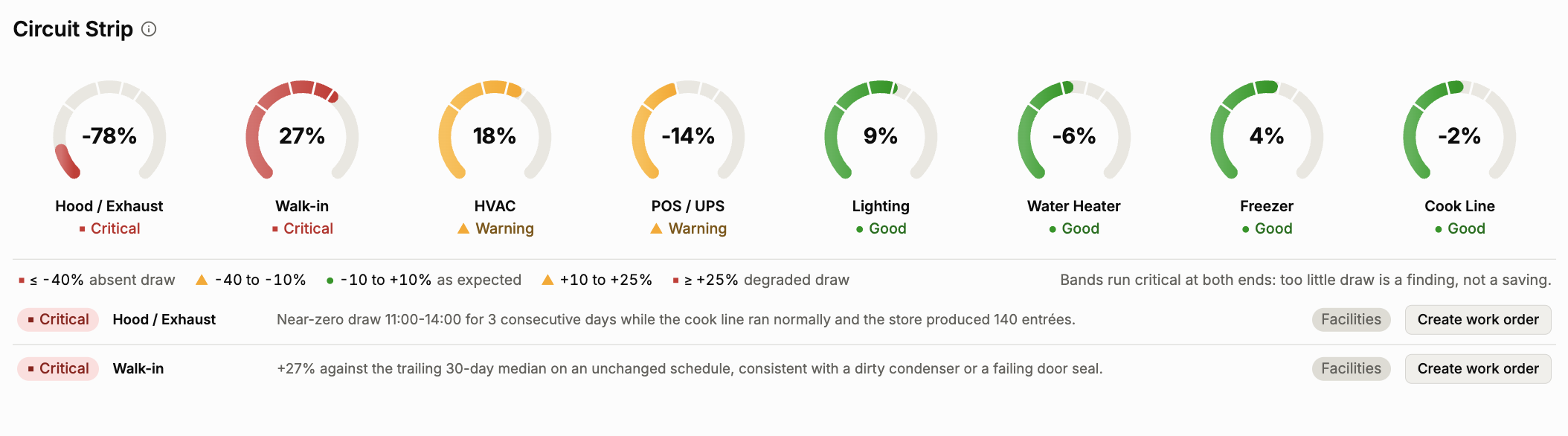
The alert says so plainly. A hood that isn't pulling is a fire-code and air-quality problem, and Facilities needs to be on site before the 11 a.m. rush. The GM gets the call to make and the math behind it in one place. Nobody had to dig through an energy portal to find it.
Where the money is: Operational AI
One alert like this protects several cost lines at once:
- Code exposure. A hood failure found during an inspection can shut a kitchen down until it's fixed, and a closed kitchen sells nothing.
- Your team's health. Poor ventilation on a full cook line puts heat, smoke, and grease into the air your crew breathes all shift.
- Repair spend. A failing exhaust fan or belt caught early is a service call. Caught late, it's a replacement.
- Energy waste. The same Cap Energy monitoring that flagged this fault is cutting energy costs by up to 20% across the rest of the kitchen.
Now run that across 50, 200, or 1,000 units. Every store gets the same early warning, delivered in the tool its GM already opens each morning.
What's next for the stack
Operators have spent a decade buying point solutions, each with its own login and its own dashboard. The next era of restaurant tech belongs to stacks where equipment data, sales, labor, and prep inform each other and hand the GM one clear decision.
Getting there takes more than an API. It takes someone who knows which vendors are worth connecting, what the combined data should do for a store leader, and how to get two companies building together. That's the work OGC does every day across 150+ brands and 12+ technology verticals.
Find the connections in your stack
Most enterprise stacks have a Cap Energy and OpSage story waiting in them: two tools you already pay for that would do more if they talked. Talk to OGC about the vendors in this article and the rest of your stack. We'll help you figure out which combinations fit your operation.
Comments